Subaru Forester Years to Avoid: The Ultimate Buyer’s Guide
The Subaru Forester is a top pick for drivers who want a rugged, reliable used car. Thanks to its standard symmetrical all-wheel drive and high ground clearance, it handles muddy trails and snowy roads with ease. But choosing the wrong model year can quickly drain your wallet.
While many Foresters run perfectly for decades, certain years hide serious mechanical flaws. If you want to avoid blowing your budget on a new engine or transmission, you need to know exactly which Subaru Forester years to avoid.
Understanding the Subaru Forester’s Generational Changes
Subaru launched the Forester in 1998, building it on the Impreza platform. Since then, the compact SUV has evolved through five distinct generations. Every time Subaru redesigned the vehicle, they introduced new technology. Sometimes, these updates worked perfectly. Other times, new engineering brought major headaches.
For instance, the shift to the third generation introduced updated boxer engines that later suffered from massive oil consumption. Likewise, the switch to the Lineartronic Continuously Variable Transmission (CVT) in later years caused severe shuddering and stalling. Knowing these generational shifts helps you spot the exact years where reliability dropped.
Common Subaru Forester Issues to Watch Out For
Before we name the specific worst Subaru Forester years, let’s look at the actual defects that plague these vehicles. Understanding these common problems will help you inspect any used model you test drive.
Head Gasket Failures: Myth vs. Reality
Many people think every Subaru blows its head gasket. That is a myth, but it is rooted in reality. Early Foresters used the EJ25 engine. Subaru built these engines with single-layer composite head gaskets that degraded rapidly over time. When they failed, engine coolant mixed with oil, causing severe overheating and engine death.
Excessive Oil Consumption
Between 2009 and 2013, Subaru updated the 2.5-liter engine. Unfortunately, they used faulty piston rings. These bad rings allowed oil to leak into the combustion chamber and burn away. Owners frequently reported burning more than a quart of oil every 1,000 miles. This led to dry engines, loud knocking noises, and complete engine failure.
Transmission and CVT Problems
In 2014, Subaru made the CVT standard across the Forester lineup. Early versions of this transmission had serious design flaws. Drivers experienced heavy shuddering, hesitation when stepping on the gas pedal, and unexpected stalling at highway speeds. Replacing a broken CVT easily costs upwards of $3,500. Just as smart shoppers research the GMC Acadia years to avoid to sidestep notorious transmission failures, you must check the CVT history on any used Forester.
Electrical, Windshield, and Airbag Defects
Mechanical parts are not the only things that fail. Several Forester models suffer from frustrating electrical glitches. The 2019 model is famous for spontaneous windshield cracking, which often breaks the expensive EyeSight safety camera system. Older models also fall under the massive Takata airbag recall, where faulty inflators pose a severe safety hazard.
Subaru Forester Years to Avoid (The Worst Models)
Now that you know what goes wrong, let’s pinpoint the exact models you should cross off your shopping list. Based on NHTSA complaints and owner repair bills, these are the worst Subaru Forester years.
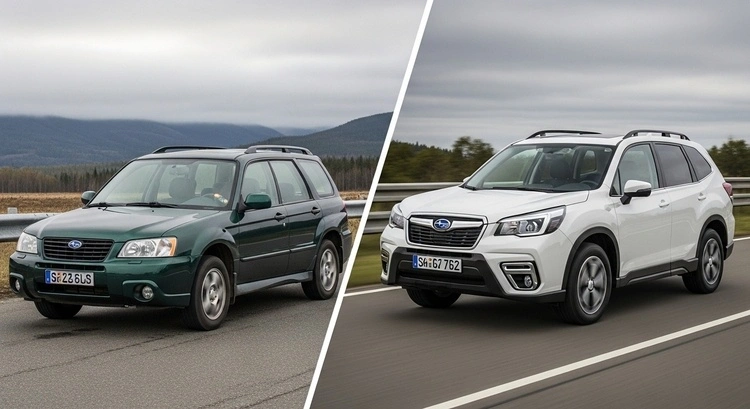
1998–2002 (First Generation): Head Gaskets & Drivetrain Flaws
You should absolutely avoid the first-generation Forester. These years are the poster child for the famous head gasket failure. Even if a previous owner replaced the gasket, many drivers report the new gasket blowing out just 30,000 miles later. On top of engine failure, the manual transmissions grind gears, and wheel bearings break down frequently.
2009–2013 (Third Generation): The Oil Consumption Crisis
The 2009 to 2013 models look great, but they hide a fatal engine flaw. This is the peak era for excessive oil consumption. Owners found themselves topping off their oil every time they filled up with gas. If you forget to check the dipstick, the engine will seize. These years also feature the dangerous Takata airbag defect. The high repair costs and safety risks make this generation a terrible choice for a reliable used car.
2014–2015 (Fourth Generation): Early CVT & Stalling Issues
When Subaru redesigned the Forester for 2014, they made the continuously variable transmission (CVT) standard. Unfortunately, early versions of this gearbox were highly problematic. Drivers reported severe hesitation and aggressive jerking when pulling away from stoplights. Worse still, engines in the 2014 and 2015 models would suddenly stall at highway speeds. Losing power at 60 mph creates a terrifying safety hazard. Add in lingering high oil consumption, and these early fourth-generation SUVs are simply too risky to buy.
2017–2019 (Fifth Generation): Windshield Cracks & Electrical Glitches
You might expect newer models to be flawless, but the 2017 through 2019 Foresters proved otherwise. The completely redesigned 2019 model suffers heavily from spontaneous windshield cracking. Owners watched their glass shatter while sitting parked in their driveways. These cracks often block the EyeSight safety cameras, leading to expensive, repeated repairs. Additionally, the automatic start/stop system frequently malfunctions, shutting the engine down at traffic lights and refusing to turn it back on.
The Most Reliable Subaru Forester Years to Buy Instead
You do not have to give up on buying a Forester. By skipping the problem years, you can easily find a dependable SUV that will run smoothly for well over 200,000 miles.
2004 & 2006–2008: The Golden Years
If you are shopping on a tight budget, look for models built between 2006 and 2008, as well as the 2004 edition. Subaru resolved most of the early head gasket issues by this point. These older vehicles feature simple, highly durable electronics and engines that require only basic maintenance to keep running smoothly.
2016–2018: Refined and Dependable
By 2016, Subaru finally fixed the CVT software and engineered the oil-burning issues out of the engine. These late fourth-generation models offer excellent crash test scores and mature EyeSight safety technology. They represent a sweet spot for used buyers seeking modern features without major mechanical flaws.
2020–2024: Modern Tech and High Safety
For maximum peace of mind, target the 2020 through 2024 model years. They boast top-tier reliability scores from J.D. Power (often hitting 84 out of 100). Subaru refined the global platform, creating a quiet cabin and a highly dependable FB25 engine that rarely sees the inside of a repair shop.
What About the 2025 and 2026 Models?
The newest Foresters continue the trend of high reliability. Subaru uses a refined 2.5-liter engine paired with a heavily updated CVT. With hybrid options hitting the market soon, the 2025 and 2026 models look to deliver strong fuel economy without sacrificing the brand’s legendary all-wheel-drive capability.
How to Inspect a Used Subaru Forester Before Buying
Always test drive a used Forester before handing over your money. Check the dipstick first; thick, black sludge means the previous owner skipped oil changes. Start the engine cold and listen for loud ticking noises. Finally, drive the car up a steep hill to test the transmission. Any slipping or shuddering means the CVT is failing.
Regional Considerations: Climate and Road Conditions Matter
Where the car lived matters just as much as how it was driven. Foresters from the Northeast or Midwest often suffer from hidden undercarriage rust due to heavy road salt. If possible, buy a vehicle that spent its life in a dry climate or was garage-kept during the winter.
How to Maintain Older Forester Models?
Keeping a Forester on the road requires strict routine maintenance. Change your engine oil and filter every 5,000 miles. Do not stretch this interval. You must also flush the coolant system regularly to prevent overheating and replace the timing belt every 105,000 miles to prevent catastrophic engine damage.
Alternatives to Consider If Avoiding Certain Forester Years
If you cannot find a clean, reliable Forester in your area, consider cross-shopping the Toyota RAV4 or the Honda CR-V. Both offer excellent cargo space and standard all-wheel drive. Alternatively, if you decide to leave the compact SUV market entirely and look for a comfortable sedan instead, make sure you research the Buick LaCrosse years to avoid so you do not accidentally trade one set of engine problems for another.
Common Misconceptions About Subaru Forester Reliability
Many buyers falsely believe that every single Subaru burns oil. While the 2009–2013 models certainly did, the modern FB-series engines are remarkably efficient and do not consume excessive oil. Another common myth is that manual transmissions never break. In reality, older manual Foresters often require expensive clutch and wheel bearing replacements.
FAQs
The 2018 and 2020 models are widely considered the best used options. They offer strong reliability scores, updated safety tech, and very few mechanical complaints.
Yes, provided the previous owner kept detailed service records. If the timing belt was replaced on schedule and the oil was changed regularly, a Forester can easily reach 250,000 miles.
Routine maintenance costs are about average for a compact SUV. However, ignoring major services like CVT fluid changes or timing belt replacements will lead to incredibly expensive repair bills.
Historically, the Forester’s biggest weaknesses have been head gasket failures on pre-2009 models, excessive oil consumption on early 2010s models, and early CVT reliability issues.
Every Subaru Forester ever built uses a 4-cylinder boxer engine. Subaru has never offered a 6-cylinder option for this specific model.