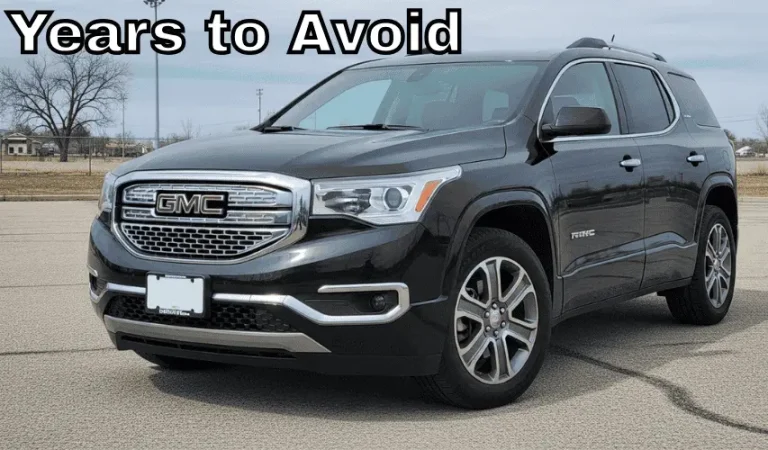
Buick LaCrosse Years to Avoid & Best Years to Purchase
The Buick LaCrosse has long been a secret weapon for used car buyers who want luxury without the luxury price tag. Replacing the aging Century and Regal models, it arrived with a promise of “QuietTuning”—Buick’s engineering philosophy designed to keep road noise out and comfort in. For the right buyer, a well-maintained LaCrosse offers a ride quality that rivals a Lexus ES at a fraction of the cost.
However, not every LaCrosse is a bargain. While some model years are incredibly durable, capable of hitting 200,000 miles with ease, others are notorious for expensive mechanical failures. If you aren’t careful, that affordable luxury sedan can quickly turn into a financial nightmare.
This guide breaks down exactly which years you should steer clear of, which ones are hidden gems, and what specific problems to watch out for during your test drive.
Quick Answer: Buick LaCrosse Years to Avoid & Best Years
If you are standing on a dealership lot right now and just need the cheat sheet, here is the breakdown of which models to buy and which to run from.
- ⚠️ Years to Avoid:2005, 2006, 2008, 2010, and 2011.
- Why? The 2005–2008 models suffer from frustrating electrical gremlins and steering issues. The 2010 model is arguably the worst, plagued by early transmission failure and timing chain issues that cost thousands to fix.
- 🏆 Best Years to Purchase:2016, 2017, and 2014.
- Why? By the end of the second generation and into the third, Buick had ironed out the major kinks. These years offer excellent reliability scores, modern safety tech, and refined interiors.
- 💰 Budget Picks:2007 and 2009.
- Why? These are the “safe bets” of the older generation. They lack modern tech, but they generally use the bulletproof 3.8L V6 engine and avoid the worst of the early production glitches.
If you are comparing large sedans from this era, it is worth looking at the competition within the Buick lineup. Check our guide on Buick Lucerne years to avoid to see how its V8 Northstar engine compares to the LaCrosse’s V6 options.
Buick LaCrosse Generations Ranked by Reliability
To understand reliability, you have to look at the car’s “bones.” The LaCrosse spans three distinct generations, each with its own mechanical personality.
First Generation (2005–2009) – The W-Body Era
This generation was built on GM’s older W-body platform. It’s a mixed bag. On one hand, you have the legendary 3.8L Series III V6 engine, which is nearly indestructible. On the other hand, the surrounding car—specifically the electronics and steering components—often feels cheap and prone to breaking. It’s a solid budget car if you can tolerate some minor repair headaches.
Second Generation (2010–2016) – The Redesign
Buick completely reinvented the LaCrosse for 2010, giving it a stunning new look and a modern interior. However, the launch was rocky. The 2010 and 2011 models had severe issues with their 6-speed transmissions and 3.6L timing chains. If you want this body style, skip the first two years and look for a 2012 or newer, where reliability improved dramatically.
Third Generation (2017–2019) – Modern Luxury
This is arguably the peak of the LaCrosse nameplate. Longer, lower, and lighter, these cars feature an 8-speed (and later 9-speed) transmission and a vastly improved chassis. Reliability scores for this generation are consistently high, making them the best choice for daily driving.
Buick LaCrosse | Years to Avoid | Detailed Breakdown
Knowing the bad years is one thing; knowing why they are bad helps you spot a lemon before you buy it. Here are the specific failures that plague the “Avoid” list.
2005–2006 & 2008 (Electrical & Steering Issues)
The earliest LaCrosse models struggle with quality control.
- Headlight Failure (HDM Module): One of the most common complaints is the Headlamp Driver Module (HDM) failing. This causes the low beams (or sometimes all lights) to cut out intermittently while driving, which is a major safety hazard.
- Steering Knuckle Wear: Owners often report clunking noises from the front suspension. This is usually due to premature wear in the steering knuckles, leading to expensive alignment issues and tire wear.
- Ignition Switch Recall: Like many GM cars of this era, these models were part of the massive ignition switch recall. If the key slips out of the “Run” position, the engine dies and the airbags are disabled. Always check the VIN to ensure this recall was performed.
2010 Buick LaCrosse (The “Stay Away” Year)
If there is one year you should absolutely avoid, it is the 2010. As the first year of the new design, it suffered from serious mechanical flaws.
- Transmission Failure: The 6-speed automatic transmission in the 2010 model has a high failure rate, often breaking the “wave plate” inside the gearbox. This leads to a loss of reverse or 3rd/5th gears and requires a full rebuild, costing $3,000+.
- Timing Chain Stretch: The 3.6L V6 engines from this year are prone to “stretching” their timing chains. This throws a Check Engine Light (codes P0008/P0017) and puts the car into “Reduced Power Mode.” Fixing it requires dropping the engine, a labor-intensive job that can exceed the car’s value.
Gemini said
Buick LaCrosse | Best Years to Purchase | Detailed Breakdown
While the early years had their struggles, Buick eventually got the formula right. The later models of the second generation and the entire third generation are excellent vehicles that offer modern comfort without the mechanical headaches.
2016–2017 (Top Reliability Scores)
If your budget allows, the 2016 and 2017 models are the “Gold Standard.” By this point, General Motors had fully resolved the timing chain issues and refined the 6-speed transmission.
- Why Buy: These years consistently score 10/10 in owner reliability surveys. You get the updated IntelliLink infotainment system, a quieter cabin, and available safety tech like Blind Spot Monitoring and Rear Cross Traffic Alert. The 2017 redesign also introduced a lighter, stronger chassis that improves fuel economy and handling.
2012–2015 (The Value Sweet Spot)
For buyers who want a modern look but don’t want to spend over $15,000, the 2012–2015 models are the sweet spot.
- Why Buy: These years fixed the catastrophic transmission flaws of the 2010 model. They also introduced the eAssist mild-hybrid system as standard on base models, boosting highway fuel economy to an impressive 36 MPG. Just be sure to check the condition of the hybrid battery if the car has high mileage.
Important Features & Specs to Evaluate
When shopping for a used LaCrosse, the engine choice matters just as much as the model year.
Engine Reliability & Options
- 3.8L V6 (Series III): Found in 2005–2009 models. This is legendary for being “bulletproof.” It’s not fast, but it will run forever with basic maintenance.
- 3.6L V6 (LFX/LGX): Found in 2012+ models. This engine offers over 300 horsepower and makes the LaCrosse feel surprisingly quick. It’s reliable, provided you stick to strict oil change intervals.
- eAssist (2.4L Hybrid): Great for fuel economy, but slightly more complex to repair.
Safety Ratings & Recalls
Safety is a strong suit for the LaCrosse. The NHTSA gave the second and third generations a 5-Star Overall Safety Rating. However, always verify that the seatbelt pretensioner recall (affecting some 2014–2016 models) has been performed, as this ensures the belts tighten correctly during a crash.
Common Problems & Diagnostic Trouble Codes (DTCs)
Even the best cars trigger a Check Engine Light eventually. If you are inspecting a LaCrosse, bring a cheap OBD2 scanner and look for these specific codes:
- P0420 (Catalyst System Efficiency): Common on 2009–2010 models. It usually means the catalytic converter has failed, a repair that can cost upwards of $1,500.
- P0008 (Engine Position System Performance): The “killer code” for 2010 models. It indicates stretched timing chains. Walk away immediately if you see this.
- P0128 (Coolant Thermostat): A minor but annoying issue where the thermostat sticks open, preventing the engine from warming up. It’s a cheap fix but common on 2017 models.
Value vs. Maintenance Costs
The Buick LaCrosse suffers from steep depreciation, which is bad for the original owner but great for you.
Price & Market Insights
You can currently find a clean 2012–2013 LaCrosse for $8,000 to $10,000. Compare that to a Toyota Avalon of the same year, which often commands $12,000 to $15,000. While the Toyota might have slightly higher resale value later, the Buick offers a quieter ride and a more upscale interior for less money upfront.
Buyer’s Checklist: How to Inspect a Used LaCrosse
Don’t buy blind. Follow these steps to ensure you aren’t picking up someone else’s problem:
- Cold Start Listen: Ask the seller not to run the car before you arrive. Start the engine cold and listen for a “rattle” that lasts 2–3 seconds. This is the sound of a loose timing chain.
- Transmission Test: Drive the car until it’s fully warm. Do several stop-and-go accelerations. If the shift from 2nd to 3rd gear feels like a “kick” or a “shudder,” the transmission wave plate may be failing.
- Check the Headlights: If looking at a 2005–2008 model, turn the headlights on and off repeatedly. If they flicker or fail to ignite, the HDM module is bad.
- VIN Check: Run the VIN through the NHTSA database to confirm all safety recalls are closed.
Conclusion
The Buick LaCrosse is a fantastic used car bargain, but only if you avoid the trap years. The 2010 model is a hard pass due to its transmission and timing chain failures. Instead, aim for a 2016 or 2017 model for the best reliability, or a 2009 model if you need cheap, reliable transportation. By following this guide and scanning for codes, you can drive away in a luxury sedan that feels brand new—without the new car payments.
Frequently Asked Questions
With proper maintenance, a Buick LaCrosse can easily exceed 200,000 miles. The key is regular oil changes, especially for the 3.6L V6 engines to protect the timing chains.
Generally, no. It shares many parts with the Chevy Impala, making repairs affordable. However, the transmission failure on the 2010 model is a notable (and expensive) exception.
Yes. By 2012, Buick had updated the engine design and oil life monitoring system, largely resolving the premature timing chain stretch that plagued earlier models.