Buick Encore Years to Avoid | Worst Years & Common Problems
Shopping for a used compact SUV can feel overwhelming. You want something affordable, easy to park, and cheap to maintain. The Buick Encore checks a lot of those boxes on paper. However, buying the wrong model year can drain your bank account with unexpected trips to the mechanic. Let’s break down exactly which models you should skip and which ones are safe to park in your driveway.
Overview of the Buick Encore & Its Reliability History
General Motors launched the Buick Encore in 2013 as a subcompact crossover. It targeted city drivers who wanted a quiet, comfortable ride without the bulk of a traditional SUV. Thanks to Buick’s QuietTuning technology, the cabin blocks out a lot of annoying road noise.
If you remember the massive, boat-like sedans from the past, you might already be researching Buick Lucerne years to avoid. The Encore is the exact opposite. It is a tiny, maneuverable vehicle that shares its core platform with the Chevrolet Trax. While later models proved very reliable, the early years of the Encore suffered from severe engine and electrical flaws.
The “Do Not Buy” List: Buick Encore Years to Avoid
When buying a used car, mechanics often warn against buying the first few years of a new generation. The Buick Encore proves this rule perfectly. You need to stay far away from the 2013, 2014, and 2015 model years.
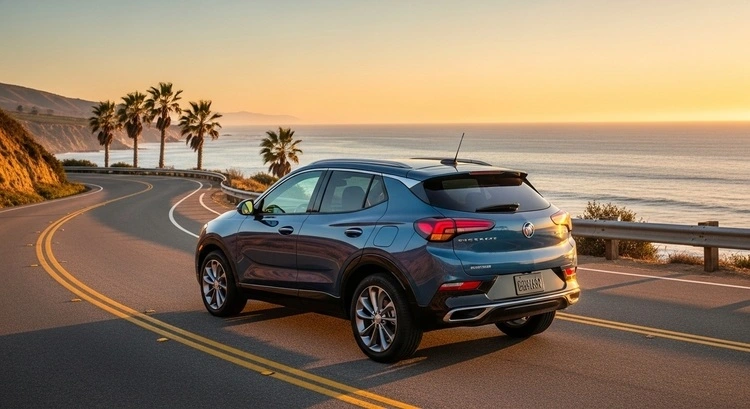
2013 Buick Encore (First-Generation Growing Pains)
The 2013 model is the absolute worst year for the Buick Encore. General Motors put a 1.4L Ecotec turbocharged engine in this vehicle, and it struggled right out of the gate. Owners constantly reported the engine stalling at low speeds. Worse, the electrical system was a mess. Drivers dealt with severe battery drain, meaning they would often wake up to a dead car in their driveway.
2014 Buick Encore (Airbag and Cooling System Failures)
You might think GM fixed the bugs by 2014, but they didn’t. This year introduced scary safety risks. A major recall targeted the airbag control module. In a crash, the software could fail, meaning the airbags and seatbelt pretensioners simply would not work.
On the mechanical side, the water pumps failed early and often. Similar to the cooling system complaints you will spot when looking up Buick LaCrosse years to avoid, the 2014 Encore struggles to keep its engine temperatures stable. Coolant leaks are very common and expensive to fix.
2015 Buick Encore (Lingering Electrical and Engine Faults)
By 2015, the safety recalls slowed down, but the engine problems persisted. The biggest headache for 2015 owners is the PCV (Positive Crankcase Ventilation) valve. This valve ruptures inside the intake manifold. When this happens, your car starts burning oil rapidly, the engine idles roughly, and the check engine light stays on permanently. Fixing this requires replacing the entire valve cover and intake manifold, easily costing you over $500.
Buick Encore Model Years to Approach With Caution
Not every early Encore is a total disaster, but you still need to tread lightly as GM slowly worked out the kinks.
2016 Buick Encore
Think of the 2016 model as a transition year. General Motors finally reinforced the turbocharger housing and fixed the nasty electrical grounding issues that plagued the older models. You will see far fewer check engine lights on a 2016 Encore. However, it still carries some of the older, sluggish infotainment tech and minor transmission hesitation. If you find a great deal on a 2016 model with a pristine maintenance history, it is an okay purchase, but you should still get a mechanic to inspect it first.
The Golden Era: Most Reliable Buick Encore Years to Buy
If the Encore feels a bit too cramped for your family and you are cross-shopping slightly larger options, you might want to review the Buick Envision years to avoid. However, if you love the subcompact size and easy parking, stick to the newer Encore models.
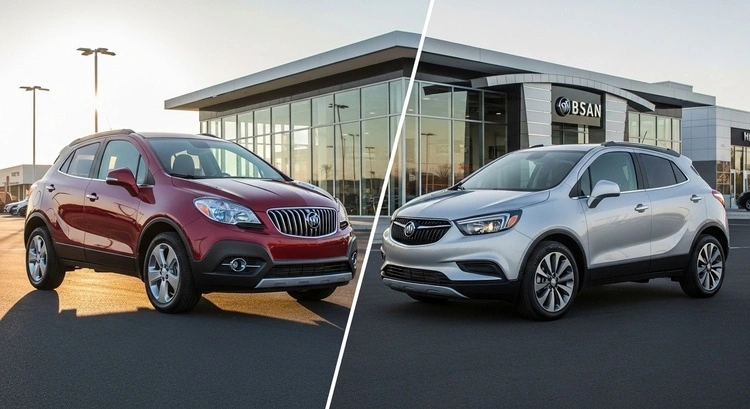
2017 Buick Encore (The Major First-Gen Facelift)
This year brought a massive interior update. Buick added a modern touch screen with standard Apple CarPlay and Android Auto. Mechanically, GM finally fixed the engine overheating issues, making this a great budget-friendly choice.
2018 Buick Encore (The Turning Point for Mechanical Fixes)
J.D. Power gave the 2018 model excellent reliability scores. The electrical architecture is incredibly stable, and suspension wear improved dramatically compared to the early years.
2019 Buick Encore (The Safe and Consistent Bet)
This is arguably the safest used purchase on the market. Complaints about the powertrain and turbocharger dropped to almost zero by 2019.
2020 Buick Encore (Peak Dependability & High Scores)
The 2020 model refined the formula perfectly. It offers top-tier dependability, smooth shifting, and incredibly low annual maintenance costs.
Common Mechanical and Electrical Issues in Problematic Encores
Knowing exactly what breaks helps you inspect a used car properly. Watch out for these four major flaws.
The Notorious 1.4L Turbocharger Failures
Early models suffer from cracked turbochargers. This leads to a sudden loss of power on the highway and a permanent check engine light on your dashboard.
PCV Valve Ruptures and Oil Consumption
When the PCV valve blows in the 2013 to 2015 models, the engine burns through oil rapidly. You will notice the engine idling very roughly at stoplights.
Cooling System Leaks and Water Pump Failures
Puddles of coolant under the car usually point to a cracked water pump. This is a very common and expensive flaw in the 2014 models.
Electrical Gremlins and Unexplained Battery Drain
Parasitic battery drains in the older generation will leave you stranded. Many owners report waking up to a completely dead battery on cold mornings.
Critical Recalls and Safety Concerns
Always run the VIN through the NHTSA database to check for these dangerous factory defects.
Older Structural Component Recalls (2013–2014)
GM recalled early models because the front seat brackets had incomplete welds. In a severe crash, the seats could actually break loose.
Transmission-Related Recalls (2019–2020)
Some models missed a vital bolt inside the transmission. This missing part could cause transmission fluid leaks and a sudden loss of power while driving.
Front Seat Fastener Recall (2020)
Certain 2020 Encore GX models were recalled because factory workers forgot to install the front seat attachment bolts entirely.
Essential Steps to Avoid Buying a Problematic Buick Encore
Protect your wallet by following these simple rules before handing over any cash.
Run a Comprehensive VIN Check for Open Recalls
Use a service like Carfax to ensure previous owners completed all mandatory safety repairs at the dealership.
Scrutinize the Routine Maintenance History
Turbocharged engines need frequent, high-quality oil changes. Skip any car that lacks a clear service history.
Schedule a Pre-Purchase Inspection (PPI)
Pay a trusted local mechanic to put the car on a lift. Have them check specifically for coolant leaks and cracked valve covers.
Know What to Listen for During the Test Drive
Turn the radio completely off. Listen for a high-pitched whining noise when you accelerate, which strongly signals a dying turbocharger.
Expected Repair and Maintenance Costs for the Buick Encore
Routine maintenance runs about $450 to $550 annually for oil changes, brakes, and tires. However, if you buy a bad year, a new turbocharger will easily cost you over $1,200 at the dealership.
Conclusion
To get a dependable vehicle, you must avoid the 2013, 2014, and 2015 models. Spend a little extra to buy a 2017 or newer Buick Encore, and you will enjoy a quiet, fuel-efficient, and highly reliable daily driver.
Frequently Asked Questions
Here are quick answers to the most common buyer concerns.
The 2013 model is the absolute worst year due to severe engine stalling, premature turbo failure, and extreme battery drain.
With strict, on-time maintenance, a newer Buick Encore can easily last between 150,000 and 200,000 miles.
You will hear a loud whining noise when accelerating, and the car will feel sluggish when trying to merge onto the highway.
No. It is highly affordable to maintain compared to European SUVs, provided you avoid the early production years that require major mechanical overhauls.