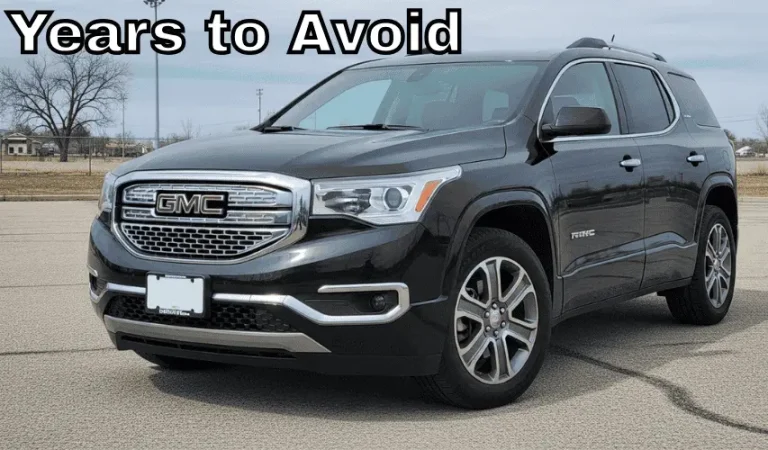
GMC Yukon Years to Avoid: The Ultimate Reliability and Buying Guide
The GMC Yukon is a full-size SUV manufactured by General Motors. It shares the heavy-duty GMT platform with the Chevrolet Tahoe and Cadillac Escalade. Buyers choose the Yukon for its high towing capacity, V8 powertrain, and spacious third-row seating. However, a used Yukon carries significant financial risk. Certain model years experience catastrophic mechanical failures. Buyers must analyze Technical Service Bulletins (TSBs) and National Highway Traffic Safety Administration (NHTSA) complaints to avoid expensive repairs and identify reliable production runs.
Overview of GMC Yukon Generations and Specs
General Motors redesigns the Yukon platform every few years. Each generation introduces new powertrain technology, electronic systems, and structural changes.
- First Generation (1992–1999): General Motors built these early models on the GMT400 platform. They introduced the luxury Denali trim to compete with premium automakers.
- Second Generation (2000–2006): The GMT800 platform added StabiliTrak safety features and highly durable early V8 engines.
- Third Generation (2007–2014): The GMT900 architecture brought major interior upgrades and introduced Active Fuel Management (AFM) systems.
- Fourth Generation (2015–2020): The GMT K2UC/G platform featured EcoTec3 direct-injected engines, magnetic ride suspension, and fold-flat seating.
- Fifth Generation (2021–Present): The current GMT1YC platform integrated an independent rear suspension and Super Cruise hands-free driving technology.
The Short Answer: GMC Yukon Years to Avoid
Avoid the first production year of any major vehicle redesign. Manufacturer defects peak immediately after a new generation launches. The absolute worst GMC Yukon model years to avoid are 2001, 2003–2005, 2007–2008, 2015, 2016, and 2021. Purchasing these specific years exposes buyers to powertrain failures, electrical malfunctions, and A/C system defects.
Maintaining a heavy-duty, full-size SUV requires significant capital. Buyers looking to reduce fuel and repair costs often downsize to a mid-size crossover. Researching the GMC Acadia years to avoid helps you bypass timing chain stretching issues common in that smaller vehicle segment. Similarly, drivers who prefer the utility of a mid-size truck over a large SUV should evaluate the GMC Canyon years to avoid to prevent buying a model with transmission shudder problems.
Deep Dive: The Worst GMC Yukon Model Years
Specific production runs show distinct patterns of mechanical failure. NHTSA safety data and long-term repair records highlight the exact components that break down in these flawed model years.
2015–2016: The Problematic Fourth-Generation Redesign
The 2015 model year is the worst GMC Yukon on the used market. General Motors completely redesigned the SUV, but factory quality control failed. Owners report total failure of the A/C condenser. The factory welds break under pressure, leaking all refrigerant. This defect requires a full condenser unit replacement.
The 6-speed and early 8-speed automatic transmissions in the 2015 and 2016 models experience violent torque converter shudder. The vehicle shakes aggressively at highway speeds. This mechanical defect often requires a complete transmission rebuild before the odometer reaches 80,000 miles.
2007–2008: Early Active Fuel Management (AFM) Flaws
General Motors introduced cylinder deactivation in 2007. They named the technology Active Fuel Management (AFM). The system shuts down half the engine cylinders at cruising speeds to improve fuel economy. The early engineering failed drastically.
The 5.3L V8 engines in 2007 and 2008 models suffer from AFM valve lifter collapse. The lifters stick, causing loud engine ticking, harsh misfires, and extreme oil consumption. This defect scores the camshaft and forces a $4,000 engine rebuild.
2001 & 2003–2005: Aging Electrical and Powertrain Gremlins
Early 2000s GMT800 trucks often hit high mileage, but the 2001, 2003, 2004, and 2005 models present severe safety hazards. Brake line corrosion is a primary defect. The factory steel lines rust rapidly in humid climates, causing a total loss of braking power.
The stepper motors behind the instrument cluster also fail constantly. Speedometers often read zero while the vehicle travels at highway speeds. Drivers seeking a smaller unibody vehicle to avoid these heavy-duty truck problems should review the GMC Terrain years to avoid to safely navigate the compact SUV market.
2021: First-Year Fifth-Generation Recalls
Newer vehicles are not immune to defects. The 2021 Yukon launched the fifth generation and suffered from severe early production flaws. Buyers faced a high volume of factory recalls. Software glitches froze digital infotainment screens and disabled backup cameras. Early production engines experienced pushrod issues that caused engine misfires. Buying a used 2021 model carries high electronic reliability risks.
Most Common GMC Yukon Reliability Issues
Identifying the weakest components of the GMC Yukon helps buyers budget for potential repairs. Certain mechanical systems fail at predictable mileage intervals across multiple generations. Dealership service records and mechanic diagnostic data point to four primary areas of concern.
Transmission Shudder and Premature Failure
General Motors equipped the Yukon with 6-speed and early 8-speed automatic transmissions that frequently fail. The torque converter internal clutch mechanism deteriorates prematurely. This creates a violent shuddering sensation that shakes the entire vehicle during highway acceleration. Rebuilding or replacing this transmission costs between $3,000 and $5,000.
Engine Lifter Collapse and Oil Consumption
The 5.3L and 6.2L V8 engines utilize an Active Fuel Management (AFM) system. This cylinder deactivation technology relies on specialized valve lifters. These lifters frequently collapse or stick due to oil pressure fluctuations. A collapsed lifter creates a loud ticking noise, causes engine misfires, and rapidly burns oil. Fixing this requires removing the cylinder heads and replacing the camshaft, a repair often exceeding $4,000.
A/C Condenser Weld Leaks
The air conditioning system in the 2015 through 2018 models contains a major manufacturing defect. The factory welds on the A/C condenser crack under normal operating pressure. The system vents all refrigerant, instantly eliminating cabin cooling. Mechanics cannot patch these cracks. You must replace the entire condenser assembly, which costs around $1,000.
Interior and Electronic Glitches
Cabin electronics and materials degrade quickly in specific model years. Third-generation models (2007–2014) utilize cheap dashboard plastics that crack extensively around the passenger airbag. Fourth-generation models (2015–2020) suffer from buggy infotainment software. Screens freeze, backup cameras fail to load, and the system reboots randomly while driving.
The Best and Most Reliable GMC Yukon Model Years
Buying a reliable GMC Yukon requires targeting late-generation production runs. General Motors typically resolves major engineering flaws three to four years after launching a new design.
Top Picks for Used Buyers
The most dependable GMC Yukon models are the 2012–2014, 2017–2019, and 2020 editions. The 2012–2014 models offer robust V8 engines where GM successfully patched the early AFM lifter defects. The 2018 through 2020 models provide excellent stability. GM fixed the A/C condenser leaks, stabilized the infotainment software, and corrected the transmission shift mapping.
What Makes Certain Years More Reliable?
Late-cycle models benefit from years of factory corrections. Engineers analyze warranty claims from early production runs and redesign failing components. Buying a 2019 model guarantees you receive the strongest, most refined version of the fourth-generation platform.
GMC Yukon Buying Guide: How to Choose the Right Used Model
Selecting the correct Yukon requires matching your cargo needs, budget, and mechanical expertise to the right configuration.
Types and Variants: Yukon vs. Yukon XL
The standard Yukon features a shorter wheelbase, making it easier to park in urban environments. The Yukon XL extends the wheelbase by 20 inches. This adds massive third-row legroom and doubles the rear cargo capacity. The XL is mandatory for large families hauling heavy gear.
Which Trim Level is Best?
The SLE trim offers basic utility and low entry prices. The SLT trim provides the best value, adding leather seats and advanced safety tech without extreme maintenance costs. The Denali trim maximizes luxury with a larger 6.2L V8 and adaptive magnetic suspension, but replacing those magnetic shocks costs $2,000 per axle.
Pre-Purchase Inspection (PPI) Checklist and Red Flags
Never buy a used Yukon without a professional Pre-Purchase Inspection (PPI). Instruct the mechanic to scan for hidden diagnostic trouble codes (DTCs) like P0700 (transmission control module failure) and P0300 (engine misfire). Listen closely for engine ticking at a cold idle. Reject any vehicle lacking documented oil change records.
The Impact of Neglected Maintenance
The AFM engine technology demands pristine oil pressure to function. Skipping oil changes causes sludge to build up inside the valve lifters, triggering immediate collapse. Ignoring transmission fluid intervals accelerates torque converter failure.
Cost of Ownership: Market Value, Upkeep, and Fuel Economy
Owning a full-size SUV requires a large operational budget. Buyers must calculate fuel, insurance, and routine maintenance before purchasing.
Current Price and Market Insights
Used Yukon prices depend heavily on generation and trim. Clean 2012–2014 models average $12,000 to $18,000. The highly reliable 2018–2020 SLT models command $35,000 to $45,000. First-year depreciation hits the Denali trims the hardest.
Average Annual Repair and Maintenance Costs
Owners spend an average of $970 annually on maintenance. Older GMT800 and GMT900 models often exceed $1,000 per year due to aging suspension components and brake replacements. Reliable late-generation models (2018–2020) drop to roughly $500 annually for basic fluids and filters.
MPG and Fuel Economy Over the Years
The Yukon is a heavy vehicle with a massive aerodynamic profile. The 5.3L V8 averages 16 MPG combined in older models and reaches 18 MPG in newer versions. For maximum efficiency, the 3.0L Duramax diesel engine available in the 2021+ models achieves an impressive 22 MPG combined.
Auto Reliability Index: Yukon vs. The Competition
The Yukon competes directly against the Ford Expedition and Toyota Sequoia. The Sequoia provides superior long-term engine reliability but features outdated cabin technology and poor fuel economy. The Expedition offers better fuel efficiency via a twin-turbo V6, but its complex engine requires extremely expensive turbocharger replacements. The Yukon strikes a balance, offering stronger towing capabilities and cheaper V8 maintenance than the Ford.
Safety Ratings and Crash Test Scores Over the Years
Safety technology improved dramatically across the Yukon’s lifespan. Early 2000s models scored poorly in NHTSA side-impact tests. By 2015, the Yukon integrated high-strength steel frames and advanced airbag systems. The 2018 and newer models consistently achieve Top Safety Pick ratings when equipped with standard Automatic Emergency Braking (AEB).
Final Verdict: Is a Used GMC Yukon a Good Investment?
A used GMC Yukon is a solid investment strictly if you purchase a late-generation model with a flawless service history. Avoid the 2007, 2015, 2016, and 2021 model years entirely. Target a clean 2018 or 2019 SLT model to secure maximum towing capability, spacious seating, and long-term mechanical reliability.
FAQs
The most frequent failures include A/C condenser leaks, AFM engine lifter collapse, torque converter shudder, and cracking dashboard plastics.
AFM shuts down engine cylinders to save fuel. However, the specialized lifters require perfect oil pressure. Dirty oil causes the lifters to stick, leading to catastrophic engine damage.
Yes. The Denali features magnetic ride control suspension and a 6.2L V8 engine. Replacing magnetic shocks costs significantly more than the standard mechanical shocks found on the SLT.
A well-maintained GMC Yukon can easily exceed 200,000 miles. Reaching 300,000 miles is possible if the owner strictly adheres to transmission fluid and oil change intervals.