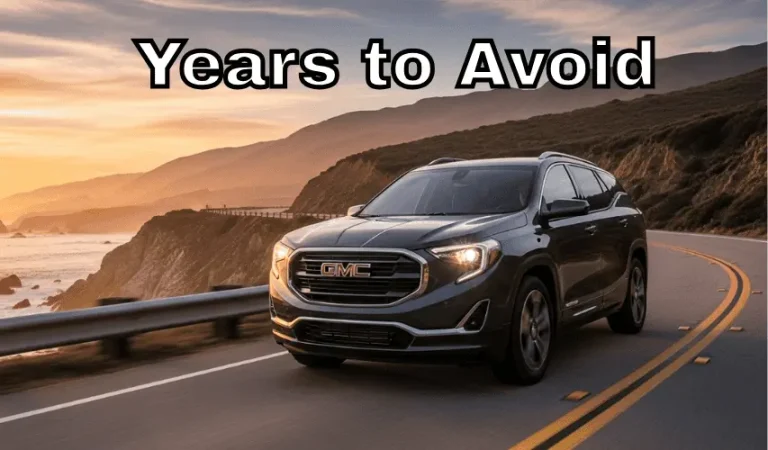
GMC Acadia Years to Avoid: Common Problems & Worst Model Years
If you are shopping for a spacious, family-friendly mid-size SUV, the GMC Acadia probably caught your eye. General Motors originally introduced the Acadia to replace the aging GMC Safari van and the GMC Envoy. Built initially on the heavy GM Lambda platform, this crossover became an instant hit for buyers who needed three rows of seating without the bulk of a full-size truck.
Over its lifespan, the Acadia has moved through three distinct generations. The second generation transitioned to the lighter C1XX platform for better fuel efficiency, and the newest generation brought a complete technological overhaul. However, the vehicle’s history is incredibly mixed. While some production years offer incredible long-term dependability, others are absolute money pits. Knowing exactly which years to skip will save you thousands of dollars and countless headaches.
Why It’s Critical to Know Which GMC Acadia Years to Avoid
Buying a used vehicle always carries some risk, but choosing a flawed Acadia model magnifies that risk significantly. We are not just talking about minor annoyances like a rattling dashboard or a squeaky seat. We are talking about major safety hazards and total mechanical breakdowns that leave families stranded on the highway.
Vehicle depreciation hits unreliable SUVs much harder than dependable ones. If you buy a model year known for engine failure, the resale value plummets the moment the check engine light turns on. Furthermore, repair costs for this specific crossover can be devastating. Rebuilding a blown transmission or replacing a stretched timing chain often results in repair bills exceeding $3,000. Identifying the exact production years that suffer from these defects is the only way to protect your wallet.
Methodology: How We Determined the Best and Worst Years
To give you the most accurate buying advice, we did not rely on personal opinions or isolated incidents. We looked strictly at the data.
Our analysis pulls directly from official National Highway Traffic Safety Administration (NHTSA) recalls and safety bulletins. We also cross-referenced historical reliability scores from industry giants like Consumer Reports and J.D. Power. Finally, to understand what actual drivers experience on a daily basis, we evaluated thousands of documented repair invoices and owner complaints submitted to CarComplaints and Edmunds. This combination of official data and real-world owner feedback paints a crystal-clear picture of the Acadia’s track record.
Common Problems with GMC Acadia Models: What to Look Out For
Before we dive into the specific years you should skip, you need to understand the systemic flaws that plague this vehicle. If you are test-driving a used Acadia, pay close attention to the following components:
- Shattered Transmission Wave Plates: Early models equipped with the 6T75 6-speed automatic transmission suffer from a severe factory defect. The internal wave plates are brittle and tend to shatter. When this happens, the transmission violently slips, clunks, or completely loses its reverse gear.
- Timing Chain Stretching: The standard 3.6-liter V6 engine is notorious for premature timing chain wear. The chain physically stretches over time, causing the engine to misfire, stall in traffic, and trigger multiple check engine light codes.
- HVAC System Malfunctions: Many owners report total air conditioning failure. The AC compressor is prone to locking up, which requires a complete and expensive overhaul of the HVAC system to get cold air blowing again.
- Water Ingress and Electrical Shorts: The weather seals around the factory sunroof and windshield are prone to shrinking. Rainwater leaks directly into the headliner and drips down into the dashboard. This water ingress shorts out expensive control modules, frequently triggering false StabiliTrak warnings and disabling the power steering.
GMC Acadia Years to Avoid: A Look at the Worst Model Years
If you are browsing a used car lot or scrolling through online listings, keep your guard up. The following model years represent the absolute lowest points in the Acadia’s manufacturing history.
2007 and 2008: The Disastrous Debut
You should avoid the 2007 and 2008 models at all costs. These represent the very first years of the first-generation Acadia, and General Motors struggled heavily to work out the mechanical bugs.
These two years hold the record for the highest number of reported transmission failures. Drivers routinely experienced complete transmission failure well before the vehicle even reached 100,000 miles. To make matters worse, some 2008 owners reported having to replace the transmission a second time just a few years later. J.D. Power gave the 2007 model an incredibly low quality and reliability score of 70 out of 100, and the 2008 model dropped even further to a 68 out of 100. The cost to keep these early models running simply outweighs their current market value.
2010 and 2011: Persistent Powertrain Issues
While General Motors attempted to fix the transmission wave plates, the 2010 and 2011 models introduced a new nightmare for owners. These years saw a massive spike in timing chain failures within the 3.6-liter V6 engine.
Drivers frequently reported sudden engine stalling at highway speeds, creating a massive safety hazard. Mechanics often pull engine trouble codes P0011 and P0014, which indicate that the timing system is out of sync. Fixing this requires dropping the entire engine out of the vehicle, resulting in labor-heavy repair bills that easily cross the $2,500 mark.
2012: HVAC Failures and Plunging Satisfaction
By the time the 2012 model rolled off the assembly line, owner frustration had reached a boiling point. Consumer Reports gave the 2012 Acadia a truly abysmal reliability score of just 16 out of 100.
While the transmission held up slightly better than the 2008 models, the auxiliary systems began to fall apart. Owners flooded Edmunds and CarComplaints with reports of failing air conditioning compressors, broken interior electronics, and leaking power steering fluid. Furthermore, the front suspension struts on the 2012 model degraded incredibly fast, leading to a harsh, rattling ride quality that ruined the driving experience.
2017 and 2018: Second-Generation Electrical Glitches
In 2017, the Acadia entered its second generation with a smaller footprint and a brand-new design. Unfortunately, first-year redesigns almost always come with severe teething problems. Buyers researching GM’s broader SUV lineup will quickly notice that identifying the GMC Terrain years to avoid requires looking at the exact same types of first-year generation electrical faults.
The 2017 and 2018 Acadia models suffer from a highly documented “Shift-to-Park” electrical defect. The electronic sensor inside the gear shifter fails to recognize when the driver puts the vehicle into the park position. As a result, the car chimes aggressively, refuses to let the driver turn off the ignition, and drains the battery overnight. Because of this widespread glitch and recurring infotainment screen blackouts, Consumer Reports handed the 2018 Acadia an 11 out of 100 reliability score, making it one of the least reliable SUVs in its class for that year.
What GMC Acadia Years Are Best To Purchase?
After reading about the disastrous transmission failures and electrical glitches of the early models, you might feel hesitant about buying this mid-size SUV. However, General Motors eventually corrected these massive factory flaws. If you know exactly which production years stabilized the platform, you can find a highly dependable family vehicle that will easily cross the 150,000-mile mark without catastrophic repair bills.
2013-2016 Models: Late First-Generation Stability
By 2013, the engineering team at GM finally reinforced the fragile internal wave plates inside the 6T75 transmission. They also updated the timing chain tensioners in the 3.6-liter V6 engine to prevent the severe stretching that plagued the 2008 and 2010 models.
The 2016 model year stands out as the absolute pinnacle of first-generation reliability. Complaints submitted to the NHTSA plummeted for the 2016 Acadia, making it an incredibly safe and cost-effective option for used car buyers who want a spacious three-row crossover without the premium price tag of a newer generation.
2019-2022 Models: Refined Second-Generation Reliability
If you prefer the modern styling and updated technology of the second-generation C1XX platform, target the 2019 through 2022 models. By 2019, General Motors systematically resolved the infamous “Shift-to-Park” electrical defect that ruined the 2017 and 2018 redesigns.
These mid-cycle models also offer a highly reliable 2.0-liter turbocharged inline-four engine option that delivers excellent fuel economy and stable thermal management. The 2022 model, in particular, achieved a stellar 85 out of 100 quality and reliability score from J.D. Power, cementing its status as one of the smartest buys in the used SUV market today.
Recognizing Points of Deterioration Before Purchasing
Even if you focus entirely on the most reliable production years, previous owner neglect can ruin a great vehicle. You must implement a strict inspection routine at the dealership to verify the mechanical health of any used SUV.
First, pull the transmission dipstick and inspect the fluid color. Healthy transmission fluid looks translucent red. If the fluid appears dark brown or smells heavily burnt, the internal clutch packs are degrading, and a transmission failure is imminent. Walk away from the vehicle immediately.
Second, test the electronic shift interlock aggressively. When test-driving any newer model, repeatedly shift the gear selector from Drive to Park. Watch the dashboard closely to ensure the vehicle accurately registers the parking gear without flashing error messages or chiming.
Finally, demand comprehensive maintenance records for any V6 model approaching 80,000 miles. You need physical proof that the previous owner replaced the timing chain and tensioners on schedule to avoid future engine stalling.
Tips to Help You Make a Secure and Reliable Purchase
Beyond a physical inspection, you can protect your investment by shopping smart. Always seek out Certified Pre-Owned (CPO) vehicles when browsing dealership lots. A CPO badge guarantees that a factory-trained mechanic has fully vetted the engine, transmission, and safety systems.
Additionally, always purchase an extended powertrain warranty that specifically covers the engine block and transmission components. This transfers the financial risk of a catastrophic breakdown away from your wallet. Before signing any paperwork, run the Vehicle Identification Number (VIN) through the official NHTSA database to ensure the dealership has completed all open safety recalls, such as airbag inflator replacements or fuel line adjustments.
If you find that the Acadia’s towing capacity falls short of your needs, ensuring mechanical longevity often brings up broader questions about the brand’s heavier platforms. Investigating are GMC trucks are reliable will easily guide you toward the brand’s robust V8 engine families designed specifically for heavy-duty hauling.
Summary: Which GMC Acadia Is Best For Your Wallet?
To guarantee a safe, cost-effective ownership experience, you must absolutely avoid the 2007, 2008, 2012, 2017, and 2018 GMC Acadia models. These specific years suffer from disastrous transmission failures, stretching timing chains, and severe electrical sensor glitches that will quickly drain your bank account.
Instead, steer your search directly toward the highly refined 2016 model or the technologically advanced 2019–2022 iterations. By focusing on these stabilized production years and conducting a thorough fluid and maintenance inspection, you will secure a dependable family SUV that holds its value and keeps you off the side of the road.